
Blog · Hip hop culture
5Pointz: the graffiti mecca that was erased in one night
A Queens warehouse covered in murals, visible from the 7 train, that the developer painted white on 19 November 2013. Years later a judge made him pay the artists $6.7 million.
· 3 min read
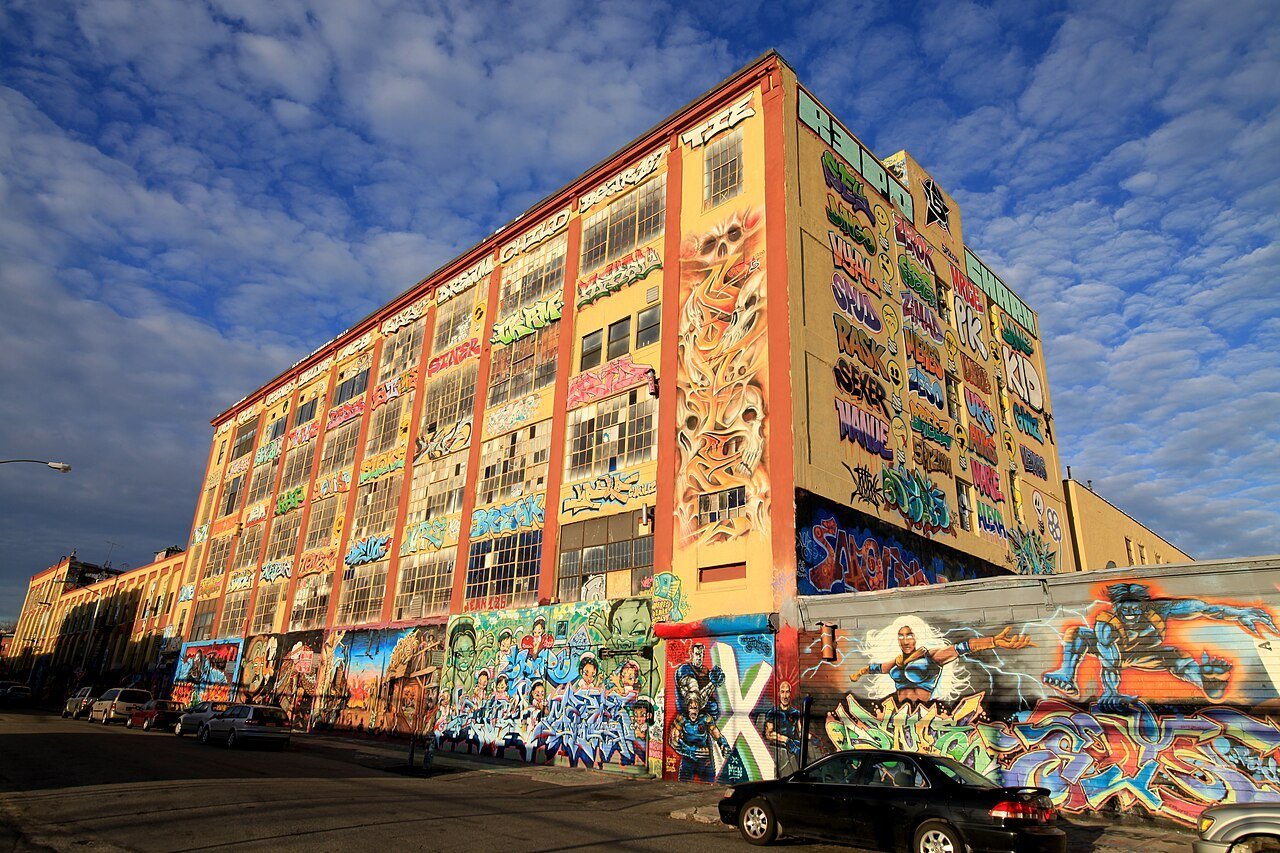
Today, 19 November, marks 13 years since one of the saddest nights in graffiti history. In 2013, in Long Island City (Queens, New York), workers covered the murals of 5Pointz in white paint. For years that building had been the world’s great open-air graffiti gallery.
From factory to spray-paint museum
It was an old industrial complex next to the elevated 7 train, so anyone crossing Queens by subway saw it. In 1993 Pat DiLillo opened the Phun Phactory there, under a programme called Graffiti Terminators. In 2002 Jonathan Cohen, a graffiti writer known as Meres One, took over: he struck a deal with the owner, Gerald Wolkoff, to turn the warehouses into exhibition space and studios, and renamed the place 5Pointz.
More than 10,000 works
From then on, more than 10,000 pieces went up on its walls. Many were temporary and were painted over with their authors’ permission, as wall culture demands. Thousands of people came to see it every day, it appeared in the film “Now You See Me” (2013) and it was a stop on an Usher tour. If graffiti is one of the five elements of hip hop, 5Pointz was its cathedral.
The night of the whitewash
In 2013 Cohen learned that Wolkoff had applied for permits to knock the building down and put up luxury apartment towers. He tried to get it protected as a landmark and also to buy it, without success. On the night of 19 November 2013 the murals vanished under white paint, with no time for the artists to save their work. In 2014 the building was demolished.
The artists win
The artists went to court under the Visual Artists Rights Act (VARA), a US law that protects authors against the destruction of their work. In February 2018 Judge Frederic Block, of the federal court in Brooklyn, ruled for 21 of them and set the legal maximum: $150,000 for each of the 45 works, about $6.7 million in total. He raised the figure because the destruction was wilful. In February 2020 the appeals court upheld the ruling, and that October the Supreme Court declined to review the case.
Why it matters to us
5Pointz made clear something hip hop culture always knew: a painted wall is art, even if it is on the street and not in a museum. At JIPJOP, graffiti belongs to the same family as the rap, the DJing and the dancing you hear every Wednesday at our hip hop party in Valencia: at Marina Beach Club from April to October and at La Diva from November to March.